
Twenty-nine new tap samples from nine supply zones extend the official monitoring. HZJZ assesses the public supply as safe; individual iron and aluminium deviations and the limits of PFAS detection expressly remain part of the findings.
The latest results extend as far as Pag and Rab
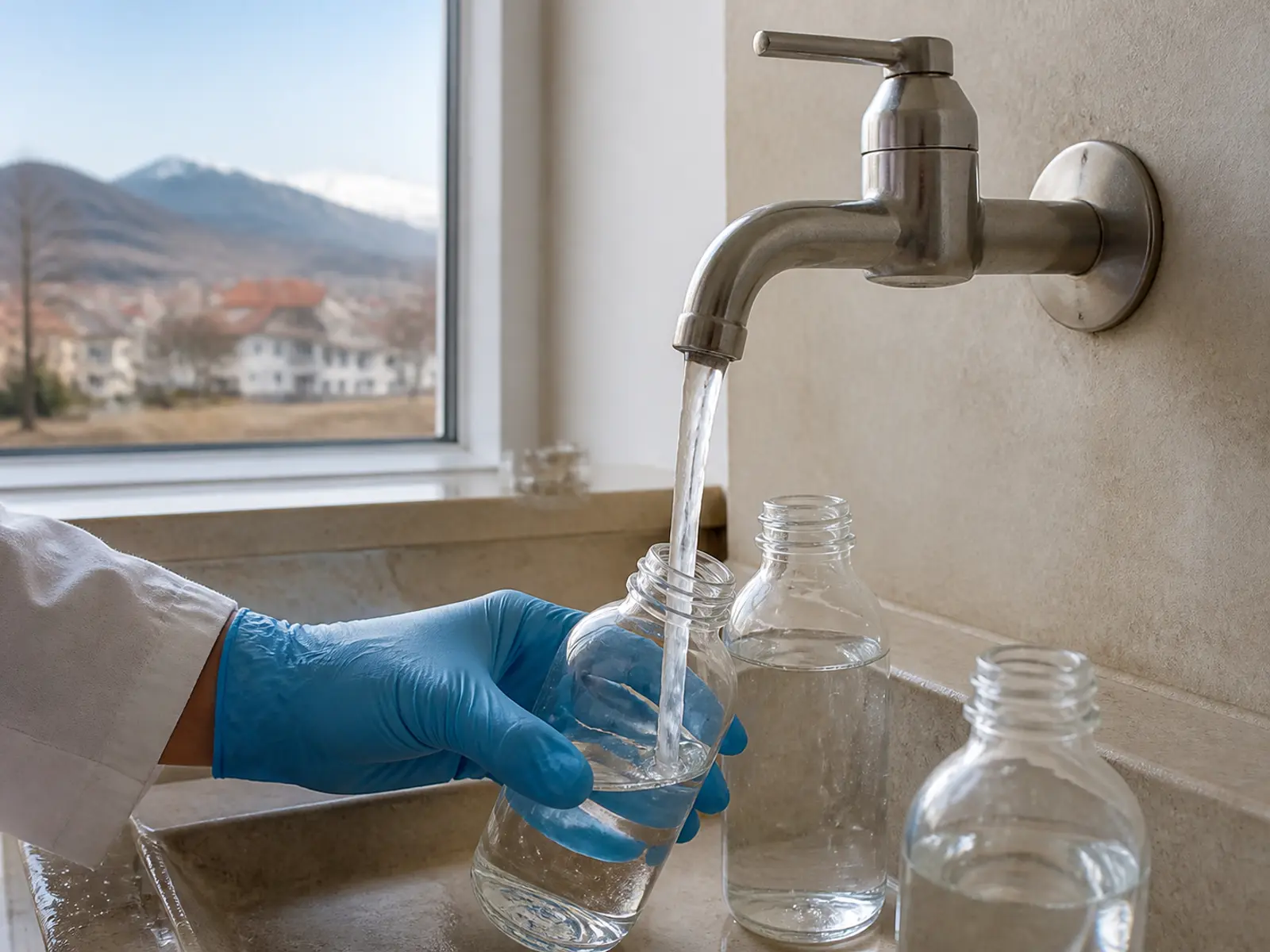
On 6 October, HZJZ reported on 29 tap samples collected from 21 to 24 September 2026. They covered GOSPIĆ 1, SENJ, TONKOVIĆA VRILO, MRĐENOVAC, NOVALJA, POVLJANA, PAG SJEVER, PAG JUG and RAB PRIMORJE. The institute now cites a total of 150 samples tested. It assesses the public supply as hygienically sound and safe to drink.
The analysed PFAS were not above the limit of quantification. At the same time, the notice reports one sample with elevated iron and one with elevated aluminium. We therefore do not describe the entire series as wholly free of deviations. We do not speculate about the cause, a private address affected or further health implications.
Keep sampling time, publication and type of water separate
The report dated 6 October describes September samples, not measurements at every tap on the day of publication. The additional raw-water section concerns water before treatment and must not be read as another September series of consumer-tap samples. HZJZ says weekly checks will continue.
The following sections document the earlier August findings and explain the differences between the network, raw water, industrial wells and building plumbing. They provide the background to the latest series; they are not additional new October samples. The article's original date and existing address remain unchanged.
The new result from 1 September
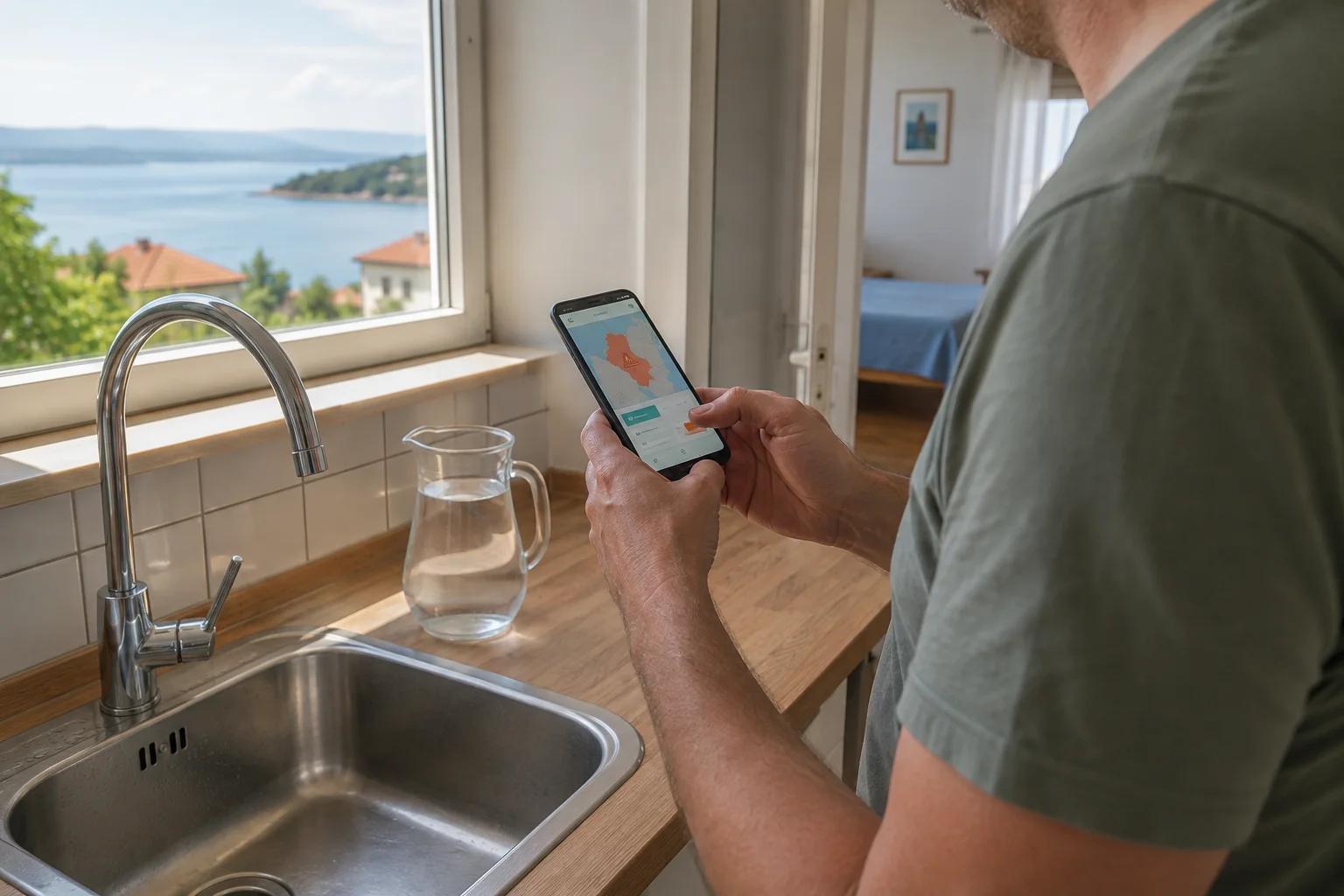
HZJZ published results from 14 additional samples taken at consumer taps in the Senj, Tonkovića Vrilo and Mrđenovac supply zones on 19 August. Every sample met the requirements, with no non-compliance found.
The PFAS compounds examined were likewise not above the limit of quantification. The new finding adds to the series of compliant results, but it still does not replace continuing monitoring or any later local instruction.
Lika and Senj · official water samples
Three types of water, three different findings
The short answer: the tap water tested was safe
The Croatian Institute of Public Health, HZJZ, has published the complete results of a sampling series conducted on August 11, 2026. At one tap each in Gospić, Otočac and Senj, neither microbiological nor chemical non-compliance was found. The official conclusion is therefore that the sampled water from the public supply was safe and fit to drink.
The samples came from a café in Gospić, a retirement home in Otočac and a kindergarten in Senj. They show the quality at specific consumer taps after treatment and passage through the network. For travellers, this is the most important level – but it is not an unlimited guarantee for every private tap, cistern and spring throughout the county and for all time.
PFAS below the limit of quantification is a precise laboratory finding
In the samples examined, the analysed PFAS compounds were not detected above the determination or quantification limit. Within the measurement method used, that is strongly reassuring. Scientifically, however, it does not mean that the absolute absence of every single molecule has been established with mathematical certainty.
For everyday purposes, the official assessment is based on validated methods and the applicable limits and evaluation criteria. Anyone who interprets the phrase ‘below the limit of quantification’ as a concealed positive finding is misreading the laboratory term. Conversely, it should not be turned into a promise for all future time – which is why sampling continues.
Raw water is not yet water from the tap
Three raw-water samples from Mrđenovac, Tonkovića vrilo and Hrmotine were examined in parallel. The chemical findings, including metals and PFAS, were unremarkable. At the same time, microbiological deviations occurred in the untreated water, which HZJZ classifies as usual for natural water that has not yet been treated.
This does not contradict the finding that tap water was safe. Raw water is sampled at its source or before treatment; it is not the product delivered directly to households. Before entering the network, water is treated and disinfected. Only a sample taken from a consumer tap shows whether treatment and the supply chain provide a hygienically safe result at that tested point.
The four deep wells are not part of the drinking-water supply
A further investigation on August 13 concerned four wells, 150 to 350 metres deep, belonging to the Calcit Lika company in the Gospić area. This water is used for technical production processes and not for the public drinking-water supply. The samples were intended to determine whether contamination from a shallow zone near a landfill might have reached the deep karst aquifer.
According to HZJZ, the four wells showed no corresponding traces: PFAS were not above the limit of quantification, and other chemical indicators likewise gave no indication that material from the landfill had entered deeper groundwater layers. Elevated levels of certain metals, turbidity, suspended solids and microbiological deviations were described as properties of this untreated karst groundwater, which is not intended for drinking.
A second large series also shows the role of a building's plumbing
During an extraordinary inspection on August 13, 22 samples were taken at consumer taps in the county, along with one sample from a water tank on Rab. In every sample, the analysed PFAS were below the limit of quantification. Twenty-one of the 22 consumer-tap samples complied with the requirements; one sample from a private property had an elevated lead level.
HZJZ attributed this individual finding to the building's internal plumbing because elevated lead was found neither at the supply sources nor at other taps in the same supply zones. This is practically important: a sound public supply and a problem in old household pipes can both be true at the same time. After water has stood for a long period, let it run briefly; if old lead pipes are suspected, only a targeted sample can provide an answer.
Six additional Gospić samples confirmed the finding
On August 17, HZJZ took six more water samples directly from taps in the GOSPIĆ 1 supply zone. All six were hygienically safe, with no departures from the prescribed values. PFAS were again not detected above the limit of quantification in this series.
This repetition is more informative than a single snapshot, but it still does not replace continuing monitoring. HZJZ has announced additional samples in other supply zones in the county and will publish the results once the analyses are complete – in the case of microbiological tests, only after the required laboratory period.
What guests should check at accommodation, in a camper or at a holiday home
Anyone connected to the public water supply can follow the latest notice from the supplier and official announcements. At a holiday home, it is worth asking the simple question of whether the water comes from the public network, a private cistern or a private well. Only in the first case can the published network result be applied directly.
Colour, smell or taste may provide clues, but they do not replace an analysis. After pipe works, a local boil-water notice or a message from the host, the more recent local instruction always applies. Water from untested springs, wells or cisterns should not be treated as drinking water simply because it looks clear.
The local notice also matters for today's accommodation
At accommodation, first check whether it is connected to the public network or uses water from a private well or cistern. A regional network finding does not clear an untested private source. A later local notice from the supplier also takes precedence over an older version of this article.
The reason for this update is the HZJZ publication of 6 October. A safe public supply and an individual finding requiring clarification can exist side by side. Readers consulting this later will find the new notice and the clearly dated earlier investigations below.
Evidence
Sources & date
Sources support the facts. Planning notes and recommendations are Golden Beach editorial assessments.
- Novo uzorkovanje vode u Ličko-senjskoj županiji – voda je zdravstveno ispravna i sigurna za pićeCroatian Institute of Public Health · 6 October 2026, updated at 13:16; samples from 21–24 SeptemberTwenty-nine tap samples, nine supply zones, 150 samples in total, PFAS and individual iron/aluminium deviations
- I novi rezultati testiranja u Gospiću još jednom potvrdili zdravstvenu ispravnost vodeCroatian Institute of Public Health · 1 September 2026; samples from 19 August14 compliant samples from Senj, Tonkovića Vrilo and Mrđenovac, plus the PFAS finding
- Water in Gospić, Otočac and Senj is safe and fit to drinkCroatian Institute of Public Health · August 24, 2026; samples from August 11Three consumer taps, three raw-water sources, microbiological and chemical findings, and PFAS
- New water test results from August 17Croatian Institute of Public Health · August 24, 2026Six additional compliant tap-water samples in the GOSPIĆ 1 supply zone and the PFAS result
- No contamination entering deep groundwaterCroatian Institute of Public Health · August 24, 2026; samples from August 13Four industrial wells 150 to 350 metres deep that are not part of the public drinking-water supply
- Results of extraordinary sampling on August 13Croatian Institute of Public Health · August 18, 2026Twenty-two consumer-tap samples, PFAS, 21 compliant samples and attribution of a single lead finding to private building plumbing