
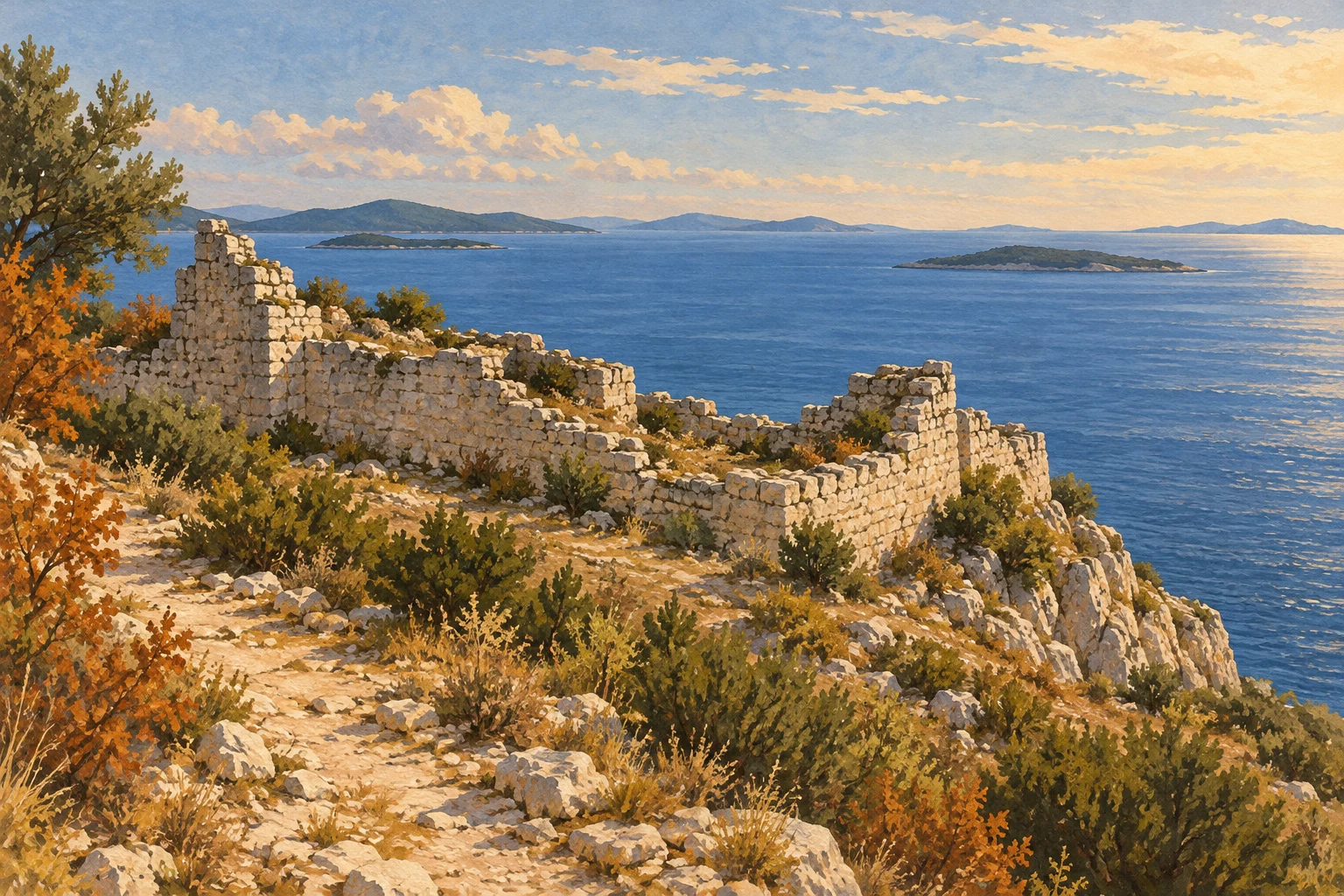
The ruin is more than a scenic viewpoint. Rogoznica’s development strategy describes abandoned military heritage in a former wine-growing landscape—and a possible future as a cultural site. It does not yet offer a safely managed museum visit.
The walls are not the only things that tell a story
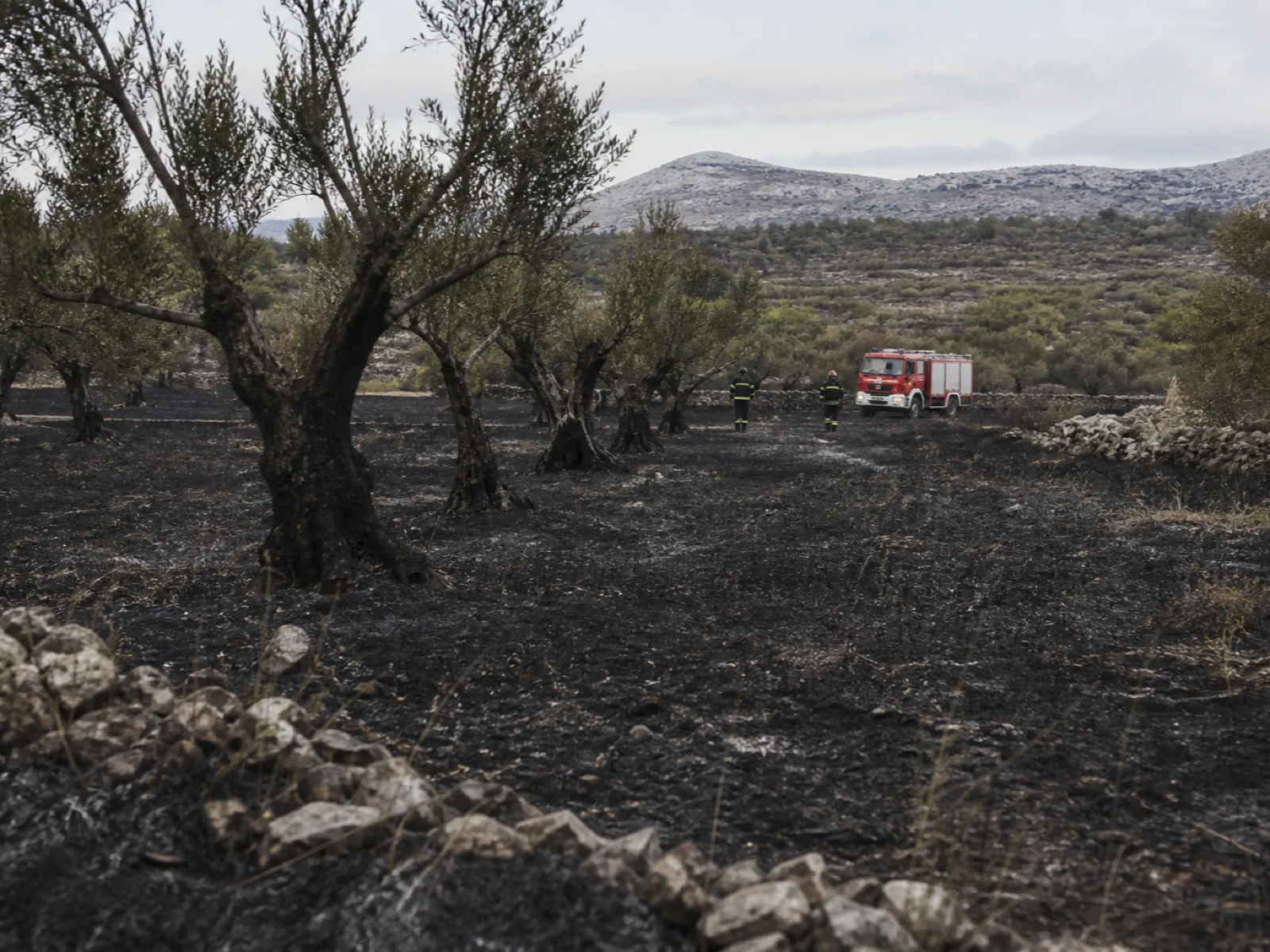
Looking at a fortress above the sea, the view is the first thing you notice. At Movar, it is worth taking a second look at the land in front of it. According to Rogoznica’s green urban renewal strategy, the hills of Mali and Veliki Movar were once planted with the Babić grape variety. The document describes them as overgrown today. The stone remnants of military use therefore stand not in a wilderness that has always been untouched, but in a landscape shaped by work too.
This changes the story of the site. Movar is not simply an abandoned building that happens to occupy a particularly beautiful position above the Adriatic. Former vineyards, paths, walls and military structures represent different uses of the same coastal area. A portrait showing only the sea view leaves out this connection between land and coast.
What Rogoznica’s documents actually describe
The municipal strategy published in January 2025 identifies the area as a separate renewal project. It draws on a landscape architecture study by Lovro Ćuk from 2014. This is a specific planning reference, but neither a current construction log nor confirmation that all proposed measures have since been implemented.
On the military heritage, the document records that the complex has no longer served that purpose since the 1960s. It describes it as abandoned, unmaintained and partly ruined. This account is insufficient for a complete building history identifying its commissioner, construction year and every subsequent alteration. Such details are therefore not supplemented here with stories from travel guides.
Picturesque decay has practical limits
The strategy explicitly identifies dangerous, collapsed or unsecured sections. The romantic impression of an abandoned place says nothing about whether it is safe to explore. The top of a wall may offer a beautiful perspective and still be the wrong place to stand; an open entrance says nothing about structural stability.
For visitors, this means not climbing walls, not entering damaged rooms or openings, and respecting barriers. Anyone wishing to see the site should first ask the local tourist information office about current access and possible restrictions. The planning document does not establish reliable parking, a signposted circuit or a guaranteed walking time. This article is a landscape portrait, not a verified hiking route.
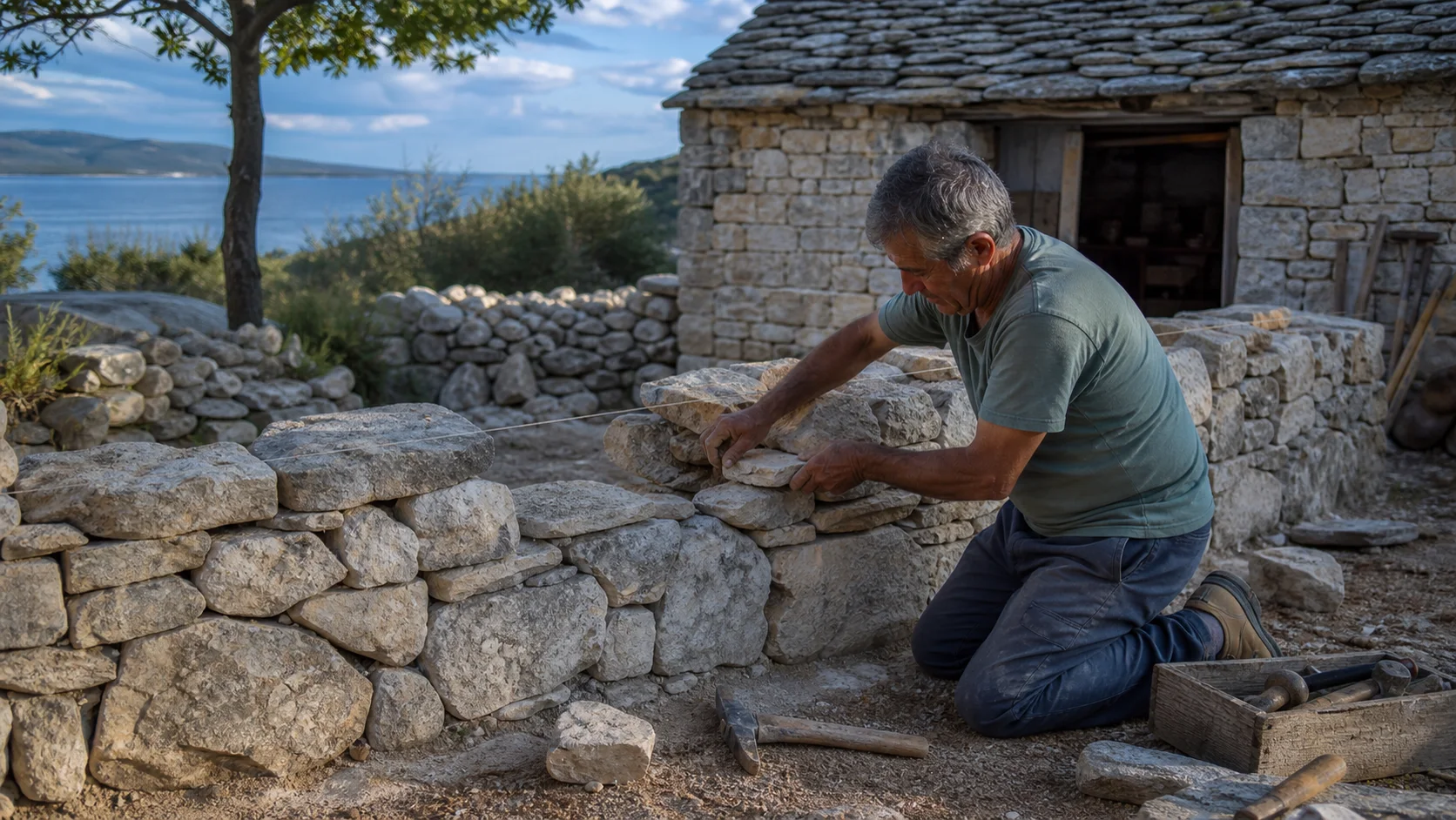
Even an apparently small intervention changes the place. Stones should not go into a backpack as souvenirs; visitors should neither rearrange loose walls nor repair them on their own initiative. Its value lies in the relationship between the structures and their surroundings, not merely in one photogenic remnant.
A museum is an idea, not yet an open door
The municipal strategy proposes a cultural and tourist reuse for Movar. Ideas include a museum of underwater archaeology, souvenir sales, a café and viewpoints. There are also paths, restoration of walls and bunkers, and proposals to use existing cisterns and solar energy.
What is striking is the connection between buildings and landscape. The proposed renewal does not stop at the fortress wall. It aims to make the entire place easier to understand and use. Whether it becomes a good visitor destination depends precisely on the less spectacular tasks: securing the site, access, responsibility and lasting maintenance.
The strategy names different owners within the project area, including the state, municipality, Hrvatske ceste and private owners. A mapped set of measures does not resolve these organisational questions. It establishes neither that the entire area is freely accessible nor that a construction contract has already been awarded. This source provides no evidence of an opening date for the proposed facilities.
Movar as part of a broader coastal history
The site deserves attention even without a new attraction. It shows how agriculture, military use and today’s leisure interests overlap on the Dalmatian coast. The former Babić plots give the fortress scene a different background: not everything that looks like remote nature today was left to itself in the past.
Seen this way, Movar needs no spectacular legend to offer something meaningful. The traces of use and the question of how much will survive a later renewal are interesting in themselves. Until a safe, documented opening, restraint is part of a visit: appreciate the place without turning its fragile sections into the backdrop for an adventure.
Evidence
Sources & date
Sources support the facts. Planning notes and recommendations are Golden Beach editorial assessments.
Time-sensitive information may change. Please check the linked primary source before travelling.